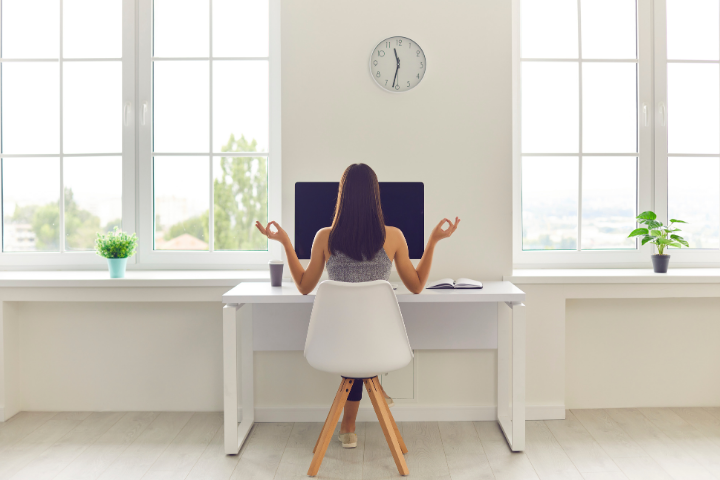
You know that moment: you look at the same paragraph for the third time, and nothing comes to mind. A mail he would normally write in two minutes now takes twenty. You're not lazy, you're exhausted. The solution is usually not another coffee, but a short and smartly used break.
What exactly are micropauses?
Microbreaks are short interruptions of work, usually from 30 seconds to 10 minutes, that you take during the working day. They are not a lunch break, and they are not scrolling while you are "resting". These are intentional moments where you give your brain a chance to recover.
Research shows that short breaks reliably reduce feelings of fatigue and restore energy. When it comes to productivity, let's be honest: taking a microbreak won't magically double your output. What it does is save you from that afternoon slump where you work slowly, make mistakes, and feel bad. For long and complex tasks, longer pauses give more, but micropauses are there so you don't reach the breaking point.
The biggest mistake: the phone is not a pause
Before the techniques themselves, this is the most important thing. If you spend your “break” on Instagram, TikTok, or reading the news, your brain hasn’t rested. It’s just switched from one source of information to another, often more intense. Research suggests that phone breaks are less restorative than screen-free breaks.
The rule is simple: the break should be different from what you have been doing. If you were sitting and looking at the screen, a break means moving and looking into the distance.
7 Techniques to Reset in 5 Minutes or Less
1. Physiological sigh (1–2 minutes)
Take a deep breath through your nose, and at the top of your breath add another short breath to fill your lungs completely. Then slowly exhale through your mouth, as long as you can. Repeat 5 to 10 times.
A study from Stanford showed that this kind of breathing, practiced for five minutes a day, improved mood and reduced feelings of anxiety. Best of all: you can do it at your desk without anyone noticing.
2. Short walk (3–5 minutes)
Get up and walk, even down the hall and back, up the stairs, or to a window. Movement improves circulation, and research has linked walking to better creative thinking. If you're stuck on a problem, a walk is often better than staring at a screen.
3. The 20-20-20 Rule (20 seconds)
Every 20 minutes, look at something about 6 meters away for 20 seconds. Eyes that spend hours focusing on the screen at half a meter get tired, and this is felt as general fatigue. This is the easiest microbreak out there, so there's no excuse to skip it.
4. A view of greenery (1 minute)
Look out your window at a tree, a park, or the sky. An Australian study found that just 40 seconds of looking at a green roof improved participants' attention spans compared to those who looked at concrete. If you don't have a view of greenery, even a plant on your desk is better than nothing.
5. Stretching at the table (2–3 minutes)
Five movements that open the body after sitting for a long time:
- slightly circling the shoulders forward and backward,
- tilting the head left and right, while holding for 15 seconds,
- arms outstretched above the head, stretching towards the ceiling,
- trunk rotation in the chair, on both sides,
- standing up and touching your toes (or as far as you can go).
Tense shoulders and neck send a stress signal to the brain. When you relax them, the head relaxes more easily.
6. A glass of water and an "empty" minute (2 minutes)
Go to the kitchen, pour a glass of water and drink it slowly, without the phone. Mild dehydration can be felt as fatigue and loss of concentration. In addition, taking a short break from the table is itself a break.
7. Brain dump (3 minutes)
Sometimes the brain is not tired, but overworked. Take a piece of paper and write down everything that comes to your mind: tasks, worries, ideas, things you mustn't forget. When it's on paper, you no longer have to keep everything in your head, so it's easier to return to what you're working on.
How to introduce microbreaks into everyday life
Knowing the techniques is easy. It's harder to actually use them, because when we're in a rush, pausing is the first thing we throw out. A few tips:
- Set a reminder. Timer every 50–90 minutes of operation. The Pomodoro technique (25 minutes of work, 5 minutes of break) is great for getting started.
- Tie a break to an existing habit. After each completed task or meeting, 2 minutes of breathing or walking.
- Don't wait until you feel exhausted. A break is most effective before you completely fall, not after.
- Change techniques. You might enjoy stretching in the morning, walking in the afternoon. Try what works for you.
A sincere warning for the end
Microbreaks are a powerful tool, but they are no substitute for sleep, a proper lunch break, and reasonable workload. If you're chronically sleep-deprived or work 12-hour days, five minutes of breathing isn't going to fix it. I can help make your day go easier, but I can't make up for what you keep denying your body.
Start with one technique. Today, for example, the 20-20-20 rule. Add a walk tomorrow. In a week, you will notice that you greet the end of the working day with more energy, and not completely drained.
